“I love it when people want to learn more about First Nations culture. Don’t be afraid that you’re going to offend someone by asking respectfully. When people ask questions, it tells me they care. It tells me they want to learn and understand. That’s how we build stronger relationships, greater understanding and better outcomes for our young people.”
For Lauren Ferguson, education has always been about more than classrooms and textbooks. It’s about connection, opportunity and helping young people discover what’s possible.
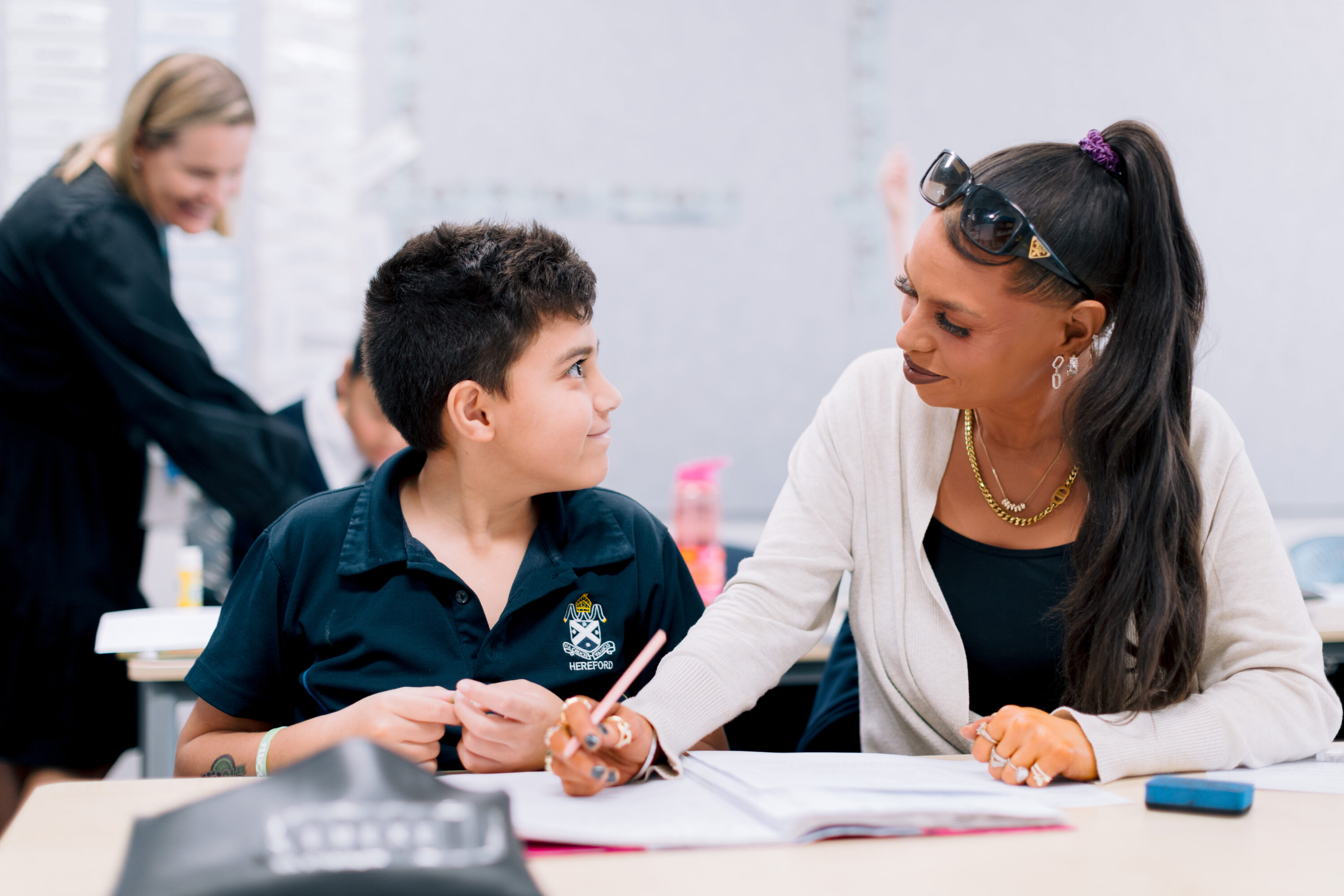
As Gawura School’s Aboriginal Educational Assistant, Lauren has spent the past nine years supporting students across every stage of their journey, drawing on her own experiences, culture and passion for helping students thrive.
Ms Ferguson talked to Mr Richard Hansen on the relationships, care and opportunities that help Gawura students thrive.
Tell us a little about your background and your journey.
I’m Bundjalung and Wiradjuri. Bundjalung comes from my Pop’s side and Wiradjuri from my Nan’s side. I grew up in Sydney and went to School here, but a lot of my connection to culture came through my grandparents and my family. My dad passed away when I was six, so a lot of my cultural learning came from my grandfather, my nan and my older brother. Even now, I’m still learning. I’m teaching myself language, doing my own research and talking with family and community members to deepen that connection. Culture is a lifelong journey. You’re always learning.
What first inspired you to work in education?
I’ve always worked with children in some way. Growing up, I was heavily involved in dance, sport and creative arts. I taught dance while I was still at school and later while I was studying at university. What really stayed with me was seeing a student leave with something you’d taught them. That feeling was so rewarding. I started thinking about the kinds of teachers I wanted to be around when I was younger – people who took the time to listen, who genuinely cared and who helped students find support when they were struggling. That was what I wanted to do for other young people.
How did you first hear about Gawura?
My mum works in a School and back in 2017 she saw an advertisement for an Aboriginal Educational Assistant position at Gawura School. She sent it straight to me and said, “This looks exactly like what you want to do.” At the time I was studying, teaching dance and working in schools, and when I saw that it was a role supporting First Nations students, I thought, “This is my dream.”
I went through the interview process and eventually got the job – it was quite a process, first 20 applicants then five then three then one – me! I’ve been here ever since, I haven’t looked back.
What made the role so appealing?
It combined everything I cared about. It was education, it was supporting young people, and it was working with First Nations students. I felt like I could bring all these different experiences with me whether it was dance, sport, creative arts or culture – and share that knowledge with students. It ticked every box.
Nine years later, what keeps you here?
I love that I get to work with every student. I have relationships with everyone in Gawura School from Kindergarten right through to Year 6, and often with students in high school as well.
Sometimes what a child needs isn’t just classroom support. Sometimes it’s helping them find a uniform, making sure they’ve had lunch, checking in on how they’re going or simply being someone they can talk to. I love being able to do those things. Honestly, getting this job felt like a miracle because I love it so much.
Why is education so important, particularly for First Nations students?
Education opens doors. There can be so many challenges and life circumstances that affect young people, and school creates pathways, support networks and opportunities that help students get where they want to go. It gives them people they can connect with and people who can help them take the next step. For me, School helped me discover my own passion for giving back. Now I have students telling me they want to do what I do – become teachers or work in education – because they’ve seen what that can look like. That’s incredibly powerful.
What changes have you seen at Gawura School over the years?
One of the biggest things I’ve seen is the growth in academic achievement and expectations. When I first started, our NAPLAN results sat well below the state average. Now we’re performing around or above the state average, which is something we’re incredibly proud of. That’s a reflection of the hard work of students, staff and families who have progressed and grown.
What would you love to see more of in the future?
I’d love to see even more opportunities for cultural learning and connection, across K-12 and across both Schools. Culture is something that should be shared across generations. Some of the most powerful learning happens when younger students can learn alongside older students and see culture being practised and lived. I’d also love to see more opportunities for staff and students across the whole school to continue learning about First Nations cultures and experiences. Learning about culture isn’t something you do once but something we need to do regularly, strengthening our knowledge.
What does “bridging worlds” mean to you?
LF: For me, it’s about connection. It’s about making sure students feel supported as they move through different stages of their education, particularly as they transition from Gawura into the wider school environment. When students know there are people who understand them, who care about them and who are working together to support them, they feel safer, more confident and more connected. That’s when they can really thrive.
Is there one message you’d like the wider community to hear?
Ask questions. I love it when people want to learn more about First Nations culture. Don’t be afraid that you’re going to offend someone by asking respectfully. When people ask questions, it tells me they care. It tells me they want to learn and understand. That’s how we build stronger relationships, greater understanding and better outcomes for our young people.