Our story begins on Gadigal land.
George Street, located at the front of Gawura School, was a cultural and pedestrian arterial route for more than twenty thousand years; a path well worn by the Gadigal Clan of the Eora Nation who walked the track to the harbour to fish, meet, and gather food.
First Nations communities have a long tradition of teaching and learning, and deep connections with the land, sky, and sea. Their lived experiences and stories are passed from generation to generation.
These important ways of knowing, being, and doing, continue today at Gawura School, with First Nations knowledges and traditions passed on by Elders, families, and community.
Gawura School families have origins in many Aboriginal and Torres Strait Islander Nations across Australia. From saltwater and freshwater – particularly Wiradjuri Nation, followed by Bundjalung and Yuin Nations.
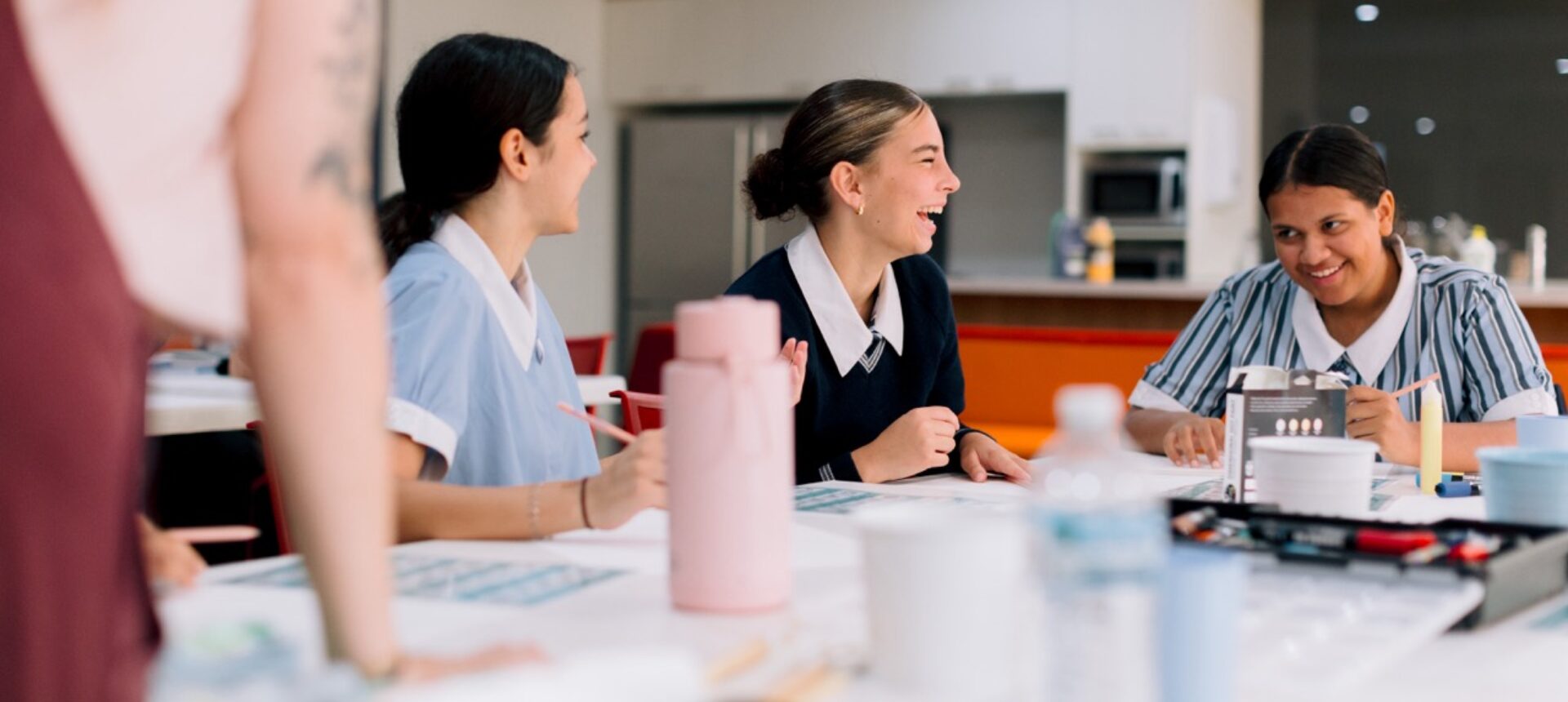
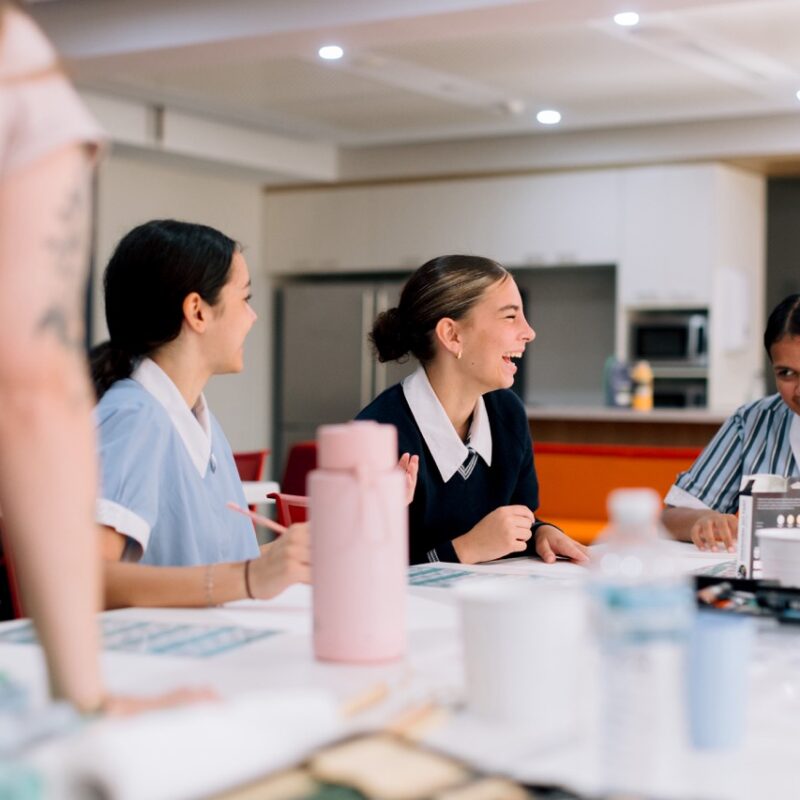
Students who attend Gawura School come from the inner city, mostly Redfern and surrounding suburbs. Students can travel to and from School daily on our Gawura School bus route, a free, dedicated service.
Telling our story
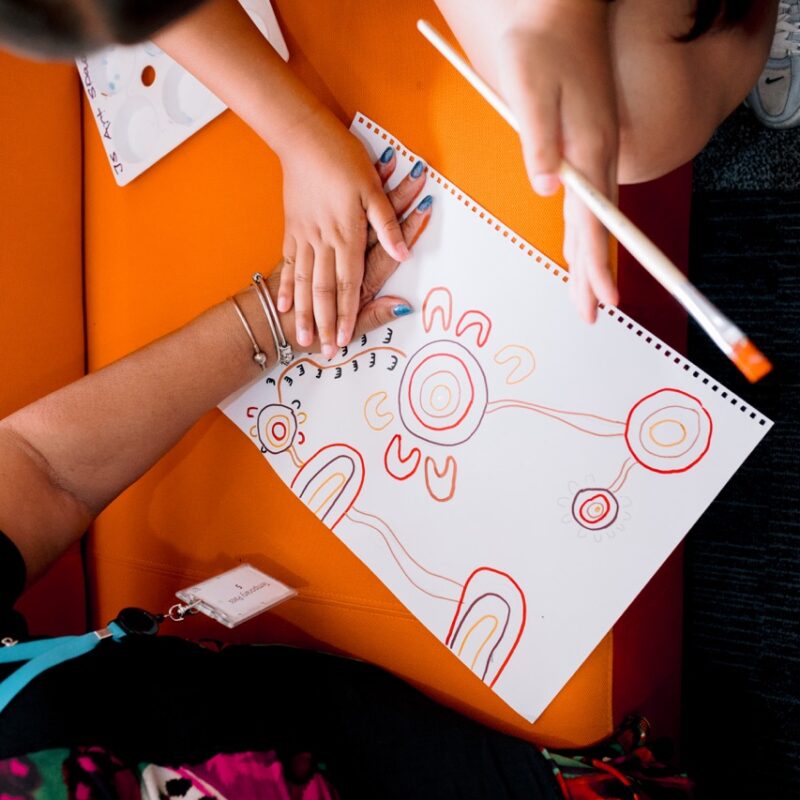
To tell the story of Gawura School, we commissioned First Nations artist, Amy Allerton from Indigico Creative, to run a workshop with First Nations students to explore their cultural identity, what it means to be a student of Gawura School, and their hopes for the future.
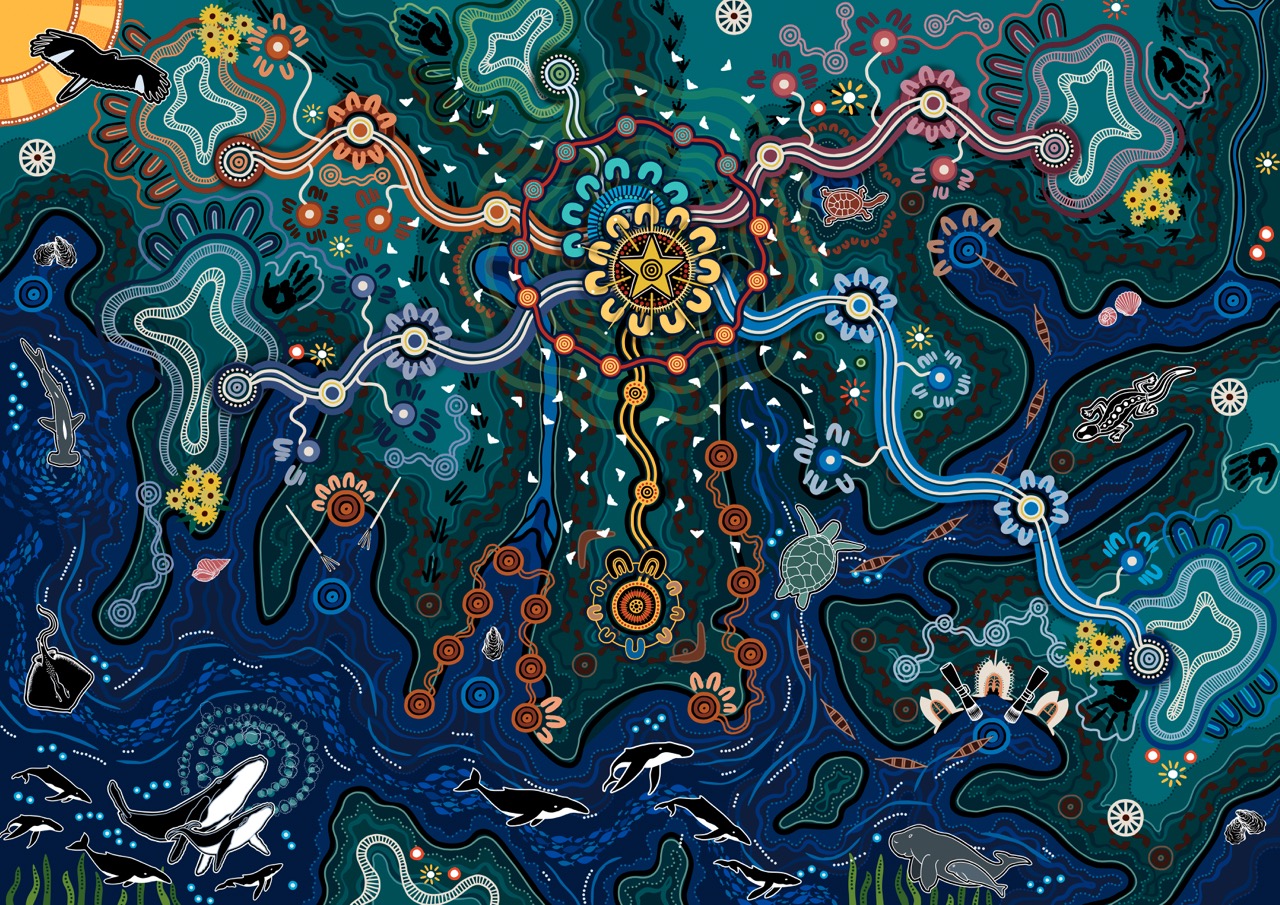
Gawura School’s artwork tells the story of Place, People, Faith and Purpose, woven together to express the identity and promise of Gawura School. The following is Amy’s artist’s statement.
Place
The story begins with Country – Gawura School stands on Gadigal land, shaped by ancient knowledge, relationships and water. Long before the modern city of Sydney grew around it, a freshwater stream known as the Tank Stream flowed through this landscape, connecting inland water sources to Sydney Harbour.
Alongside this stream ran a major trade and travel route used by First Nations peoples for thousands of years – a pathway now known as George Street. Though the stream itself no longer flows above ground, its presence lives on in story.
In the artwork, flowing water represents this ancient pathway and honours Country as a living source of knowledge, movement and connection. Where freshwater meets saltwater, two ecosystems merge – reflecting the meeting of two ancient knowledges at the heart of Gawura School: First Nations culture and the transformative power of Christian faith.
Moving through these waters is the whale, a totem of the Gadigal. In First Nations cultures, totems are emblems of identity, kinship and guardianship. In the same way, the Bible uses symbols to express identity and belonging – including the vine (the people of God), the shield (Creator God), the Lion and the Lamb (Jesus), and the dove (the Holy Spirit). Across both culture and faith, these symbols speak to who we are and who we belong to.
The whale pod travels along the coastline and through Sydney Harbour on their annual migration. Their journey mirrors the journey of Gawura School students – learning to navigate their own path before returning to community, continuing a cycle of family, knowledge and connection.
People
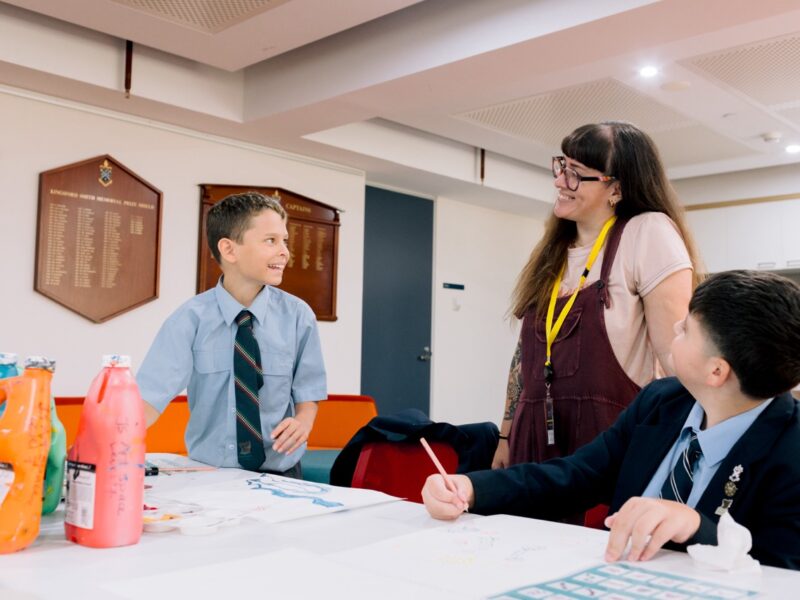
At the centre of the artwork sits Gawura School and St Andrew’s Cathedral School – two schools in partnership on a shared journey of learning where both First Nations and non-Indigenous students learn from one another, with the shared hope that every child leaves with a deep commitment to restoration and healing.
Journey lines represent the diverse paths that bring students to the School from Traditional lands across Australia and the Torres Strait Islands. Bogong moths, known for their long migrations, symbolise students developing their voice, strengths and agency, as they grow in identity and purpose.

Faith
Woven through these stories is the presence of faith. A five-pointed star sits at the centre of Gawura School, symbolising the guiding light of God. Ripples of light radiate outwards, representing hope, restoration, transformation and the School’s motto, Via Crucis, Via Lucis – the way of the cross is the way of light.
These ripples also symbolise the impact that each student makes as they go out into the world as confident, hope-filled champions of a just tomorrow.
This movement of light reflects flowing currents of living water, reflecting Jesus’ promise of renewal and nourishment in John 4:13, ‘Whoever drinks the water I give them will never thirst. Indeed, the water I give them will become in them a spring of water welling up to eternal life.’
Purpose
Above the landscape, the rising sun marks the dawn of a new day – a symbol of hope, renewal and new beginnings.
Beneath the sun, the living water and rich, fertile soil of Country prepare the way for the seeds of each student’s life to be nurtured and fed so that they can be deeply rooted in faith and culture, growing into a fruitful and flourishing tree, standing tall and strong.
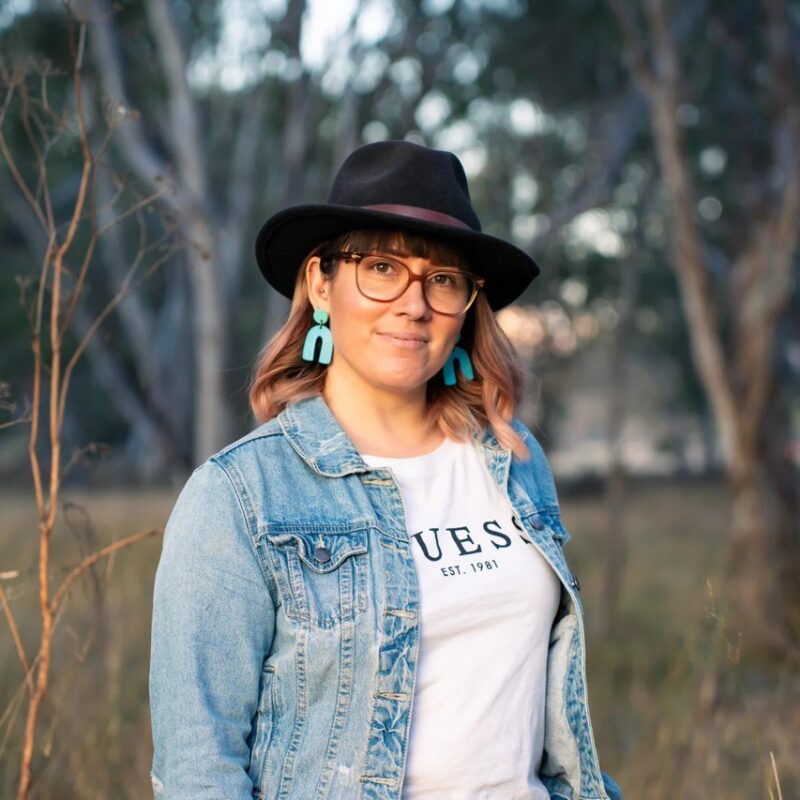
The artist
Amy is the founder and Director of Indigico Creative, a graphic designer, photographer, cultural consultant and contemporary Aboriginal artist. Amy is a Gumbaynggirr and Bundjalung woman whose family’s traditional land is located in the Clarence Valley in a rural area called Cangai in NSW.
Amy’s identity is strongly grounded in Gomeroi culture, history, dreaming, art and language having been born and raised in Tamworth, NSW where she still lives.
Amy’s artworks are an extension from her journey of exploring her own cultural identity, bringing her unique ability to speak in colour and imagery to create visual representations of the journeys and values of organisations and communities.